Paper Promises: Confirming That a UK Supplier Actually Occupies the Site It Claims
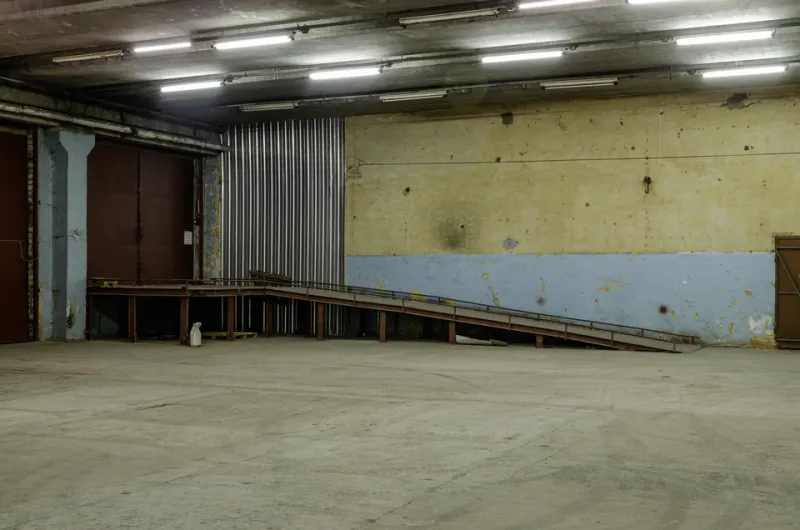
Photo: Sergej Majboroda, CC0, via Wikimedia Commons
Approval of a new supplier is usually a documentary exercise. A trade reference is obtained, insurance certificates are filed, bank details are verified by call-back, and a purchase order is raised. What is rarely established is whether the organisation on the other side of the contract occupies the premises it advertises, employs the people it names, or can deliver the volume it has promised. In a significant number of frauds and insolvencies, that question is answered only after the first payment has left the business.
Ghost suppliers are rarely elaborate. Many are simply ordinary trading companies that have overstated their footprint — a subcontractor presenting itself as a manufacturer, a broker describing a third party's warehouse as its own. Others are constructed for the purpose and abandoned once funds arrive. The checks that distinguish one from the other are lawful, largely documentary and can be completed discreetly in a matter of days.
The registered office proves very little
Companies House requires a registered office address, but it does not require that the company trades there, or indeed conducts any activity there at all. An accountant's office, a formation agent's address or a serviced building in a provincial city centre will satisfy the filing obligation and present neatly on an invoice.
A more informative test is the address itself. How many companies are registered at that postcode? Are they in unconnected sectors, with different directors and overlapping incorporation dates? Does the building appear on street-level imagery at a date after the supplier claims to have moved in? Does the local authority's licensing register, planning portal or business rates information reference the occupier? A service address that differs from the trading address, while entirely legitimate in many cases, is worth understanding rather than assuming.
Delivery addresses deserve separate attention. A supplier that asks for payment to one entity, invoices from a second and receives goods at a third is not necessarily fraudulent, but each hop should be explained in writing.
VAT and filing history as a timeline
VAT registration details can be checked against HMRC's published validation service, and, for cross-border counterparties, against the EU's system. What matters is not merely that a number is valid but when it was issued. A supplier claiming fifteen years of trading under a VAT number registered eighteen months ago is presenting an inconsistent account of itself, as is one whose stated turnover is incompatible with its declared employee count.
Filing history is equally revealing. Micro-entity accounts, a dormant balance sheet, dormant accounts, a change of accounting reference date at an inconvenient moment, or a recent string of resignations and appointments among directors all warrant examination. So does the corporate network: shared directorships with dissolved companies, charges registered against assets the supplier claims to own, and a group structure in which the contracting entity holds no assets at all.
Capacity is a claim that can be tested
Statements about capability are the easiest to assert and among the easiest to verify. A manufacturer claiming a single production site and a night shift should be able to evidence both: equipment schedules for insurance purposes, maintenance contracts, environmental permits, waste consignment notes, or certification to recognised standards such as ISO 9001 or BRCGS where the sector requires it.
Headcount claims are corroborated through indirect indicators rather than staff lists — payroll provider references, apprenticeship levy declarations, pension auto-enrolment documentation, or the shift patterns visible at the gate. Professional profiles and website team pages are marketing material, not evidence, and are frequently assembled from stock photography and contractors.
Logistics leave a trail
Where physical goods are involved, the movement of those goods generates records that are difficult to fabricate consistently. Delivery notes, weighbridge tickets, haulier invoices, port and ferry records, courier account histories and the customer's own goods-in logs can be cross-referenced. Inconsistencies tend to be simple: consignments too large for the nominated vehicle, delivery times that do not match gate records, or a claimed fleet with no operator licence.
Borrowed addresses and the show site
Some of the more sophisticated arrangements involve a legitimate host. A supplier sublets a corner of a third party's warehouse, applies its own signage before a customer visit, and routes calls through a shared answering service. The premises exist; the capacity does not. Warning signs include an address that is also used by competitors, a reception that cannot confirm the company name without prompting, and a site whose signage appears newer than the business relationship it advertises.
A discreet site observation, conducted lawfully from publicly accessible vantage points, will often settle the question in an afternoon: whether there is vehicle movement, whether the unit is lit and staffed, whether the name on the door matches the name on the invoice.
Building verification into the payment cycle
Pre-payment verification works best as a staged process rather than a single gate. A light-touch screen at onboarding, a deeper check before the first significant payment, and periodic refresh for suppliers holding credit terms or advance payment arrangements. Escalation thresholds should be defined in advance: a change of bank details, a new delivery address, a large first order or a request for a deposit all justify a second look.
A short list of questions worth asking
- Does the trading address support the activity described, and who else uses it?
- When was the VAT registration issued relative to the claimed trading history?
- Are the accounts consistent with the turnover and headcount asserted?
- Can equipment, permits, insurance and logistics records corroborate capacity?
- Do directors appear in other companies with a pattern of short lives or insolvency?
- Has the bank account been verified independently, through a known contact rather than the details on the invoice?
None of these checks is dramatic, and individually none is conclusive. Taken together, they establish whether the organisation in front of you is what it says it is. Given the cost of discovering otherwise after the money has moved, that seems a modest investment in certainty.